Case Study

Elsevier Scopus
Profile
Management

End-to-end redesign of the profile editor for one of the world's largest academic databases, serving researchers, authors and institutions globally across two connected platforms.

SaaS Enterprise UX Research Product Design Strategy
↑ TasksSuccess rates
↓ SupportManual interventions
5 yrsAt Elsevier
Elsevier Scopus profile editor

Company

Elsevier B.V. — STM Publishing, Netherlands
My role
Senior UX Designer
Industry
STM Publishing / SaaS
Company size
5,000+ employees
Scope
Research, design, testing, delivery

The system was built around internal logic, not user intent

Scopus is one of the world's largest abstract and citation databases, supporting researchers, authors, librarians and institutions globally. Profile management plays a critical role in how research identity, credibility and impact are represented across the platform.

Managing a Scopus profile was structurally complex for both individual researchers and institutions. Simple updates required navigating rigid flows, fixed navigation paths and multi-step processes that were difficult to understand, generating a high volume of customer enquiries and manual updates.

Despite serving different user groups, the core problem was the same: the system prioritised process consistency over user control.

The structural problem

The editor required users to move through fixed navigation structures even when they only wanted to update a single element, creating unnecessary steps, cognitive load and confusion across both platforms.

Two platforms, one problem

Author profiles and institutional profiles had different user groups and goals, but shared the same structural limitations. Any solution needed to work across both without creating inconsistency.

Scale and complexity

Designing in this context meant navigating technical constraints and organisational complexity across multiple product teams, engineers and stakeholders, while keeping the experience coherent and human-centred.

Task success rates
Users completing profile edits without errors or drop-off
Support requests
Reduction in manual interventions and customer enquiries
User confidence
Improved system learnability and cross-platform consistency
Core assignment

One system. Two platforms.

The redesign covered two distinct user groups sharing the same underlying structural problem.

01

Author Profiles

Individual researchers managing their academic identity and research output.

The problem

Researchers needed to correct publication attributions, update affiliations and manage their impact metrics, but the fixed editor flow forced them through unrelated steps to reach a single field.

The solution

A modular, section-based editor that lets authors engage only with the content relevant to their goal. Each section is independently editable with clear state feedback and contextual guidance.

02

Institutional Profiles

Librarians and administrators managing research output at an organisational level.

The problem

Institutional users managed large volumes of data with high accuracy requirements. The existing system provided no meaningful progress visibility or error-state guidance, increasing mistakes and support dependency.

The solution

The same modular interaction model, adapted for institutional scale. Clear progress indicators, explicit states and contextual feedback reduced errors and gave administrators confidence in the accuracy of their changes.

From system-led to user-led

The core shift was structural. Rather than solving a UI problem, the project delivered a system-level UX solution, replacing a rigid, process-driven editor with a modular, intent-driven one.

The same interaction logic was applied across both platforms, creating a shared design system while respecting the different needs of authors and institutional administrators.

Users can now edit specific components independently, understand their progress clearly, receive immediate contextual feedback and move through the editor in the order that makes sense for their goal.

Before
Fixed linear navigation
After
Modular, intent-driven editor
Before
Generic system-level guidance
After
Contextual, step-level feedback
Before
Separate inconsistent flows
After
Shared system across platforms
Design screens

Modular by design

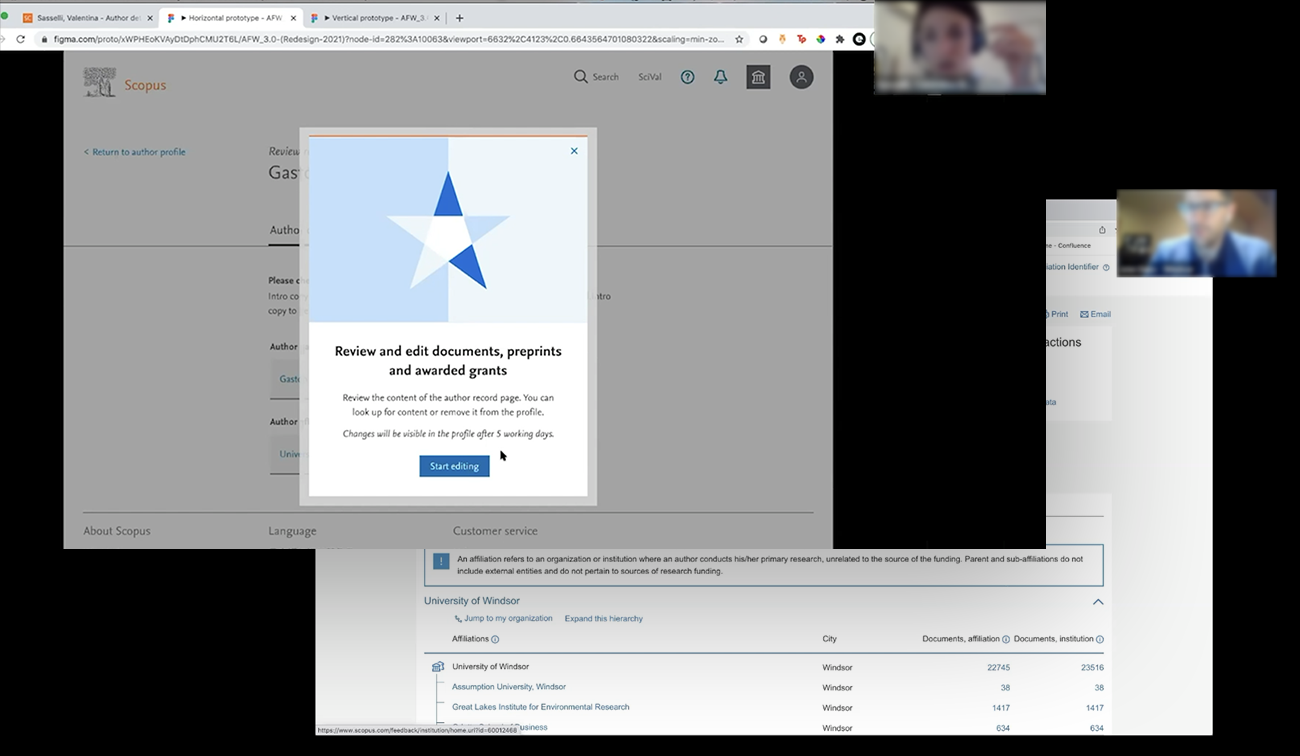
Key screens from the redesigned Scopus Profile Editor across author and institutional flows.

Scopus profile editor overview
Qualitative research
Scopus profile editor detail
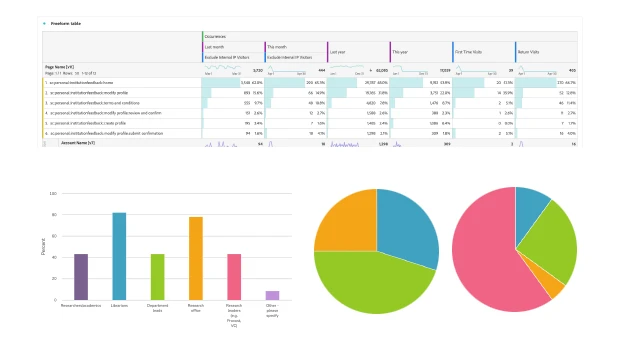
Quantitive research
Author flow
Institutional flow

Navigation was system-led, not user-led

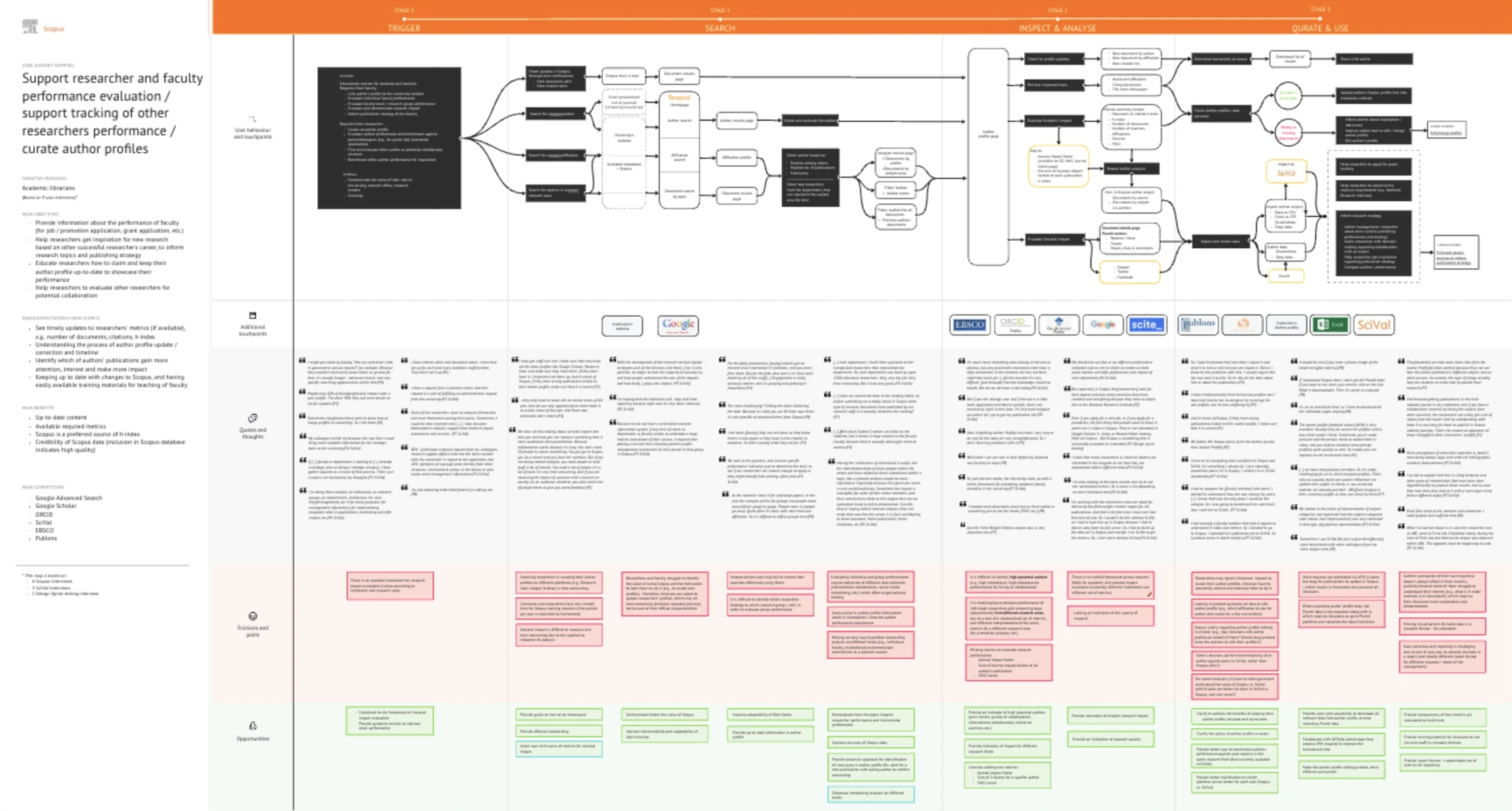
To understand the problem at platform level, I led research across both user groups. A clear pattern emerged across every method: the editor forced users into predefined paths regardless of their goal. Navigation was system-led rather than intent-led. Guidance was generic instead of contextual.

The redesign was validated through a combination of moderated and unmoderated testing, behavioural analysis and cross-team design reviews, confirming clearer navigation patterns, faster task completion and reduced dependency on support.

User interviews Journey mapping Task flow analysis Usability testing Stakeholder workshops Cross-platform system mapping
Task success ratesUsers completing profile updates without errors or confusion
User confidenceStronger understanding of system state and progress
Support requestsFewer customer enquiries and manual update interventions
Cross-platform consistencyShared interaction model across author and institutional flows
Manual interventionsReduced dependency on offline support for routine profile tasks
Strategic reflection

Scale requires structure, not rigidity

Key insights

Modularity reduces cognitive load at scale. Breaking complex editors into independent sections makes large systems feel approachable.

Platform UX requires system thinking. Solving screen-level problems without addressing the underlying structure only shifts the friction elsewhere.

Consistency builds understanding. A shared interaction model across platforms reduces the learning curve for users who operate across both.

Flexible models scale better than rigid ones. Designing for user intent rather than process steps creates a foundation that adapts as the product grows.

Future recommendations

Extend the modular model. Apply the same interaction patterns across other Scopus workflows beyond profile management.

Create shared patterns across Elsevier. The design system built for Scopus could serve as a foundation for consistency across other Elsevier products.

Continue the shift to user-led flows. Use research to identify remaining areas where the system still drives the experience rather than the user's intent.

Design for scalability through structure. As Scopus grows, the priority should be maintaining flexibility, not adding complexity.

See more of my work

Browse the full portfolio or get in touch to discuss how I can bring this kind of thinking to your team.