Case Study

Travel Experience Booking Platform

Strategic redesign of a niche luxury tour operator's digital presence — closing the gap between a premium physical experience and a digital product that was actively driving users away.

BEFORE Book now 91% bounce ↑ Third-party booking engine Visual break — trust lost different font · clashing palette ⚠ Cookie consent missing — EU & US exposure transcendenttravel.com AFTER T · T Book Behind the scenes of British heritage TV SELECT YOUR TOUR Midsomer Downton Cotswolds Check dates → Small Accept
Industry
Luxury Travel
My Role
UX Designer & Strategist
Company Size
Startup
Scope
Research, Design, Strategy

A premium product with a budget digital experience

Transcendent Travel offers behind-the-scenes tours for fans of British mystery and heritage television — think Midsomer Murders and Downton Abbey. The physical offering is truly premium: concierge-level, intimate, and deeply immersive. The website was the opposite.

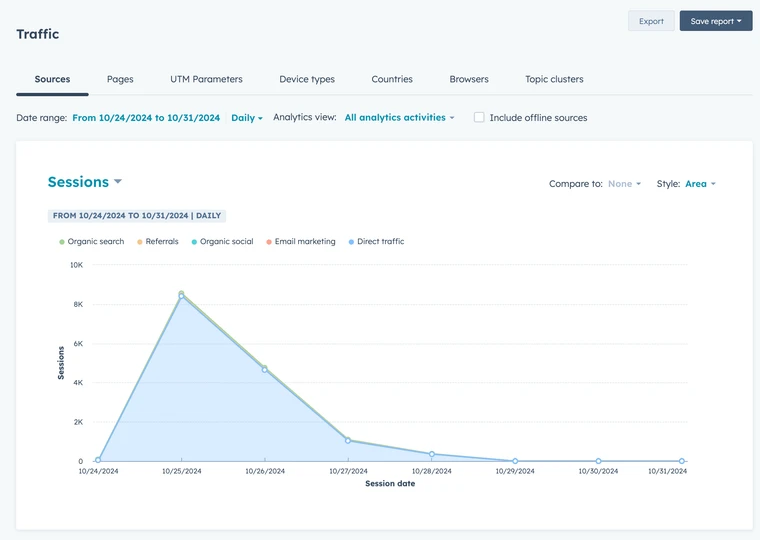
The core user group — an older demographic with lower tech-tolerance — found the site so difficult to navigate that most resorted to booking by phone. A 91% bounce rate confirmed what the team already knew: the digital experience was failing the brand.

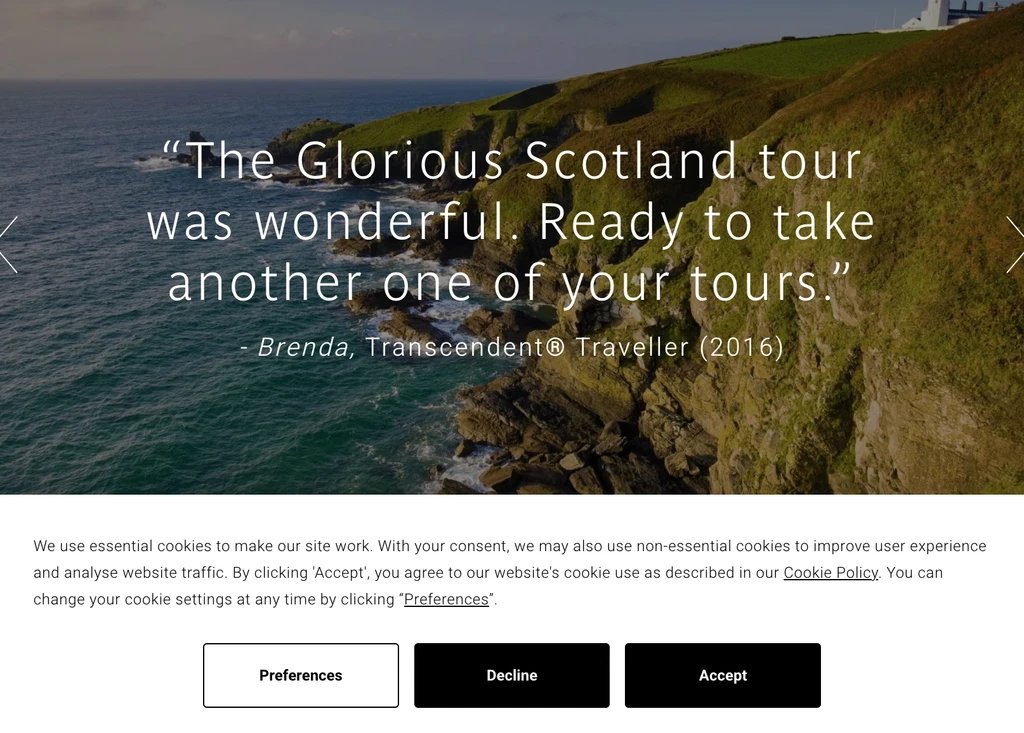
The existing booking path compounded the problem by pushing users into a third-party system with clashing colours and a sharp visual break from the main site. Legally, the site was also exposed: missing cookie banners were required for both US and EU visitors.

Note: The proposed designs are currently in implementation. The live site still reflects the "before" state, which serves as the primary catalyst for this overhaul.

91% Bounce Rate

The overwhelming majority of visitors left without taking any action — a signal that trust and navigation were broken from the first interaction.

Phone as a fallback

Users with low tech-tolerance defaulted to calling to complete bookings, creating significant administrative overhead and friction in the purchase journey.

Fragmented booking experience

The third-party booking engine introduced a sharp visual discontinuity — different colours, layouts and typography — breaking trust at the highest-intent moment.

Legal exposure

Missing cookie consent banners created compliance gaps for both US and EU audiences, requiring urgent resolution as part of the redesign scope.

91%
Bounce Rate — Before
Baseline established from analytics audit; primary driver of the redesign brief.
2
Defined Personas
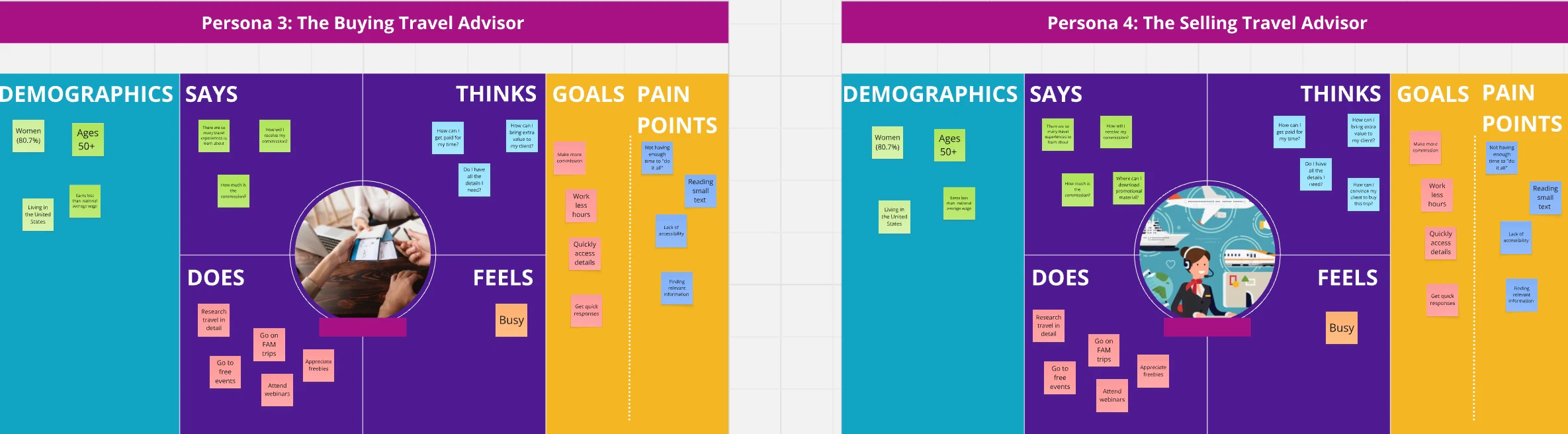
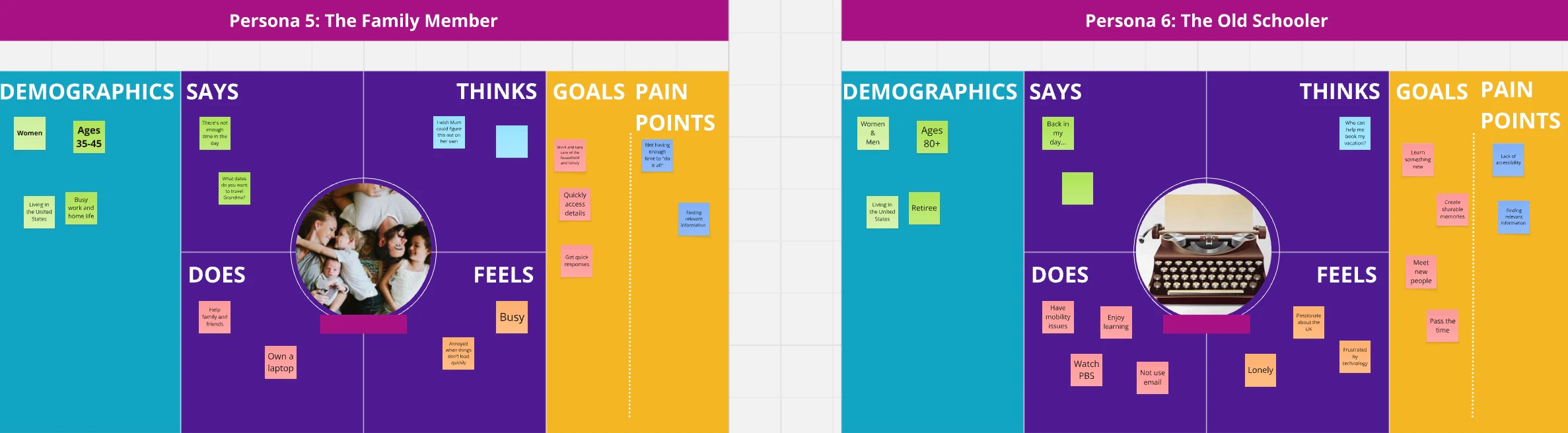
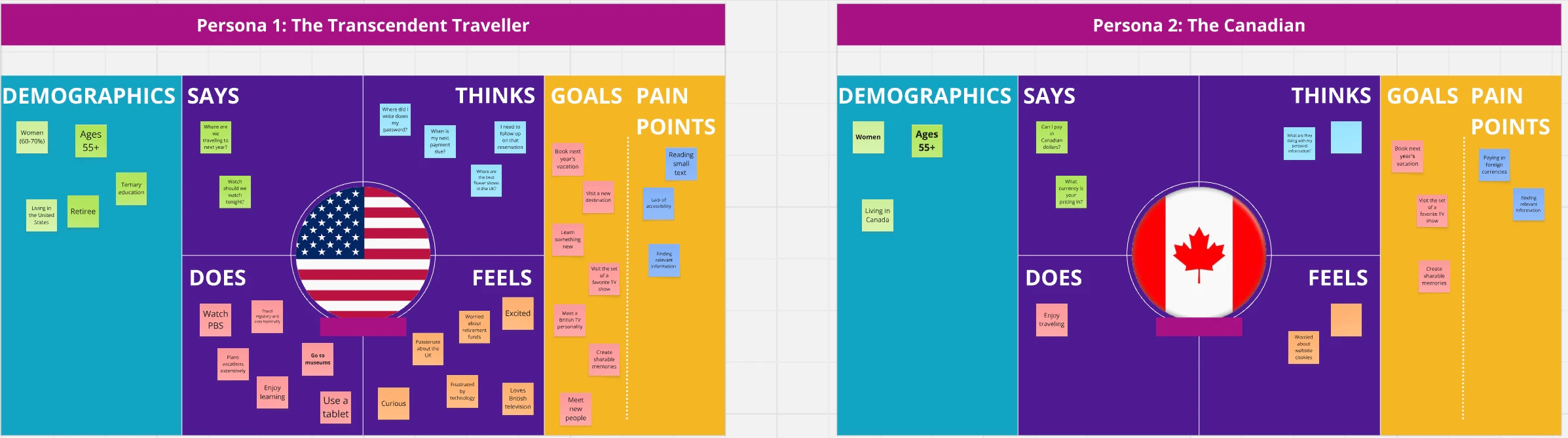
"The Enthusiast" and "The Transcendent Traveller" — mapped with cognitive and accessibility needs.
Manual Interventions
Target outcome: shift bookings online, reducing phone dependency and admin overhead.
Core Assignment

One brand. Multiple failure points.

In collaboration with communications manager Tamara, the audit surfaced three interconnected failure points — each requiring a distinct design solution, all needing to work as a cohesive whole.

Website & Navigation

The problem

The existing site had no clear path from landing page to booking. Information architecture prioritised internal logic over user intent, and the experience lacked hierarchy for tech-limited users.

The solution

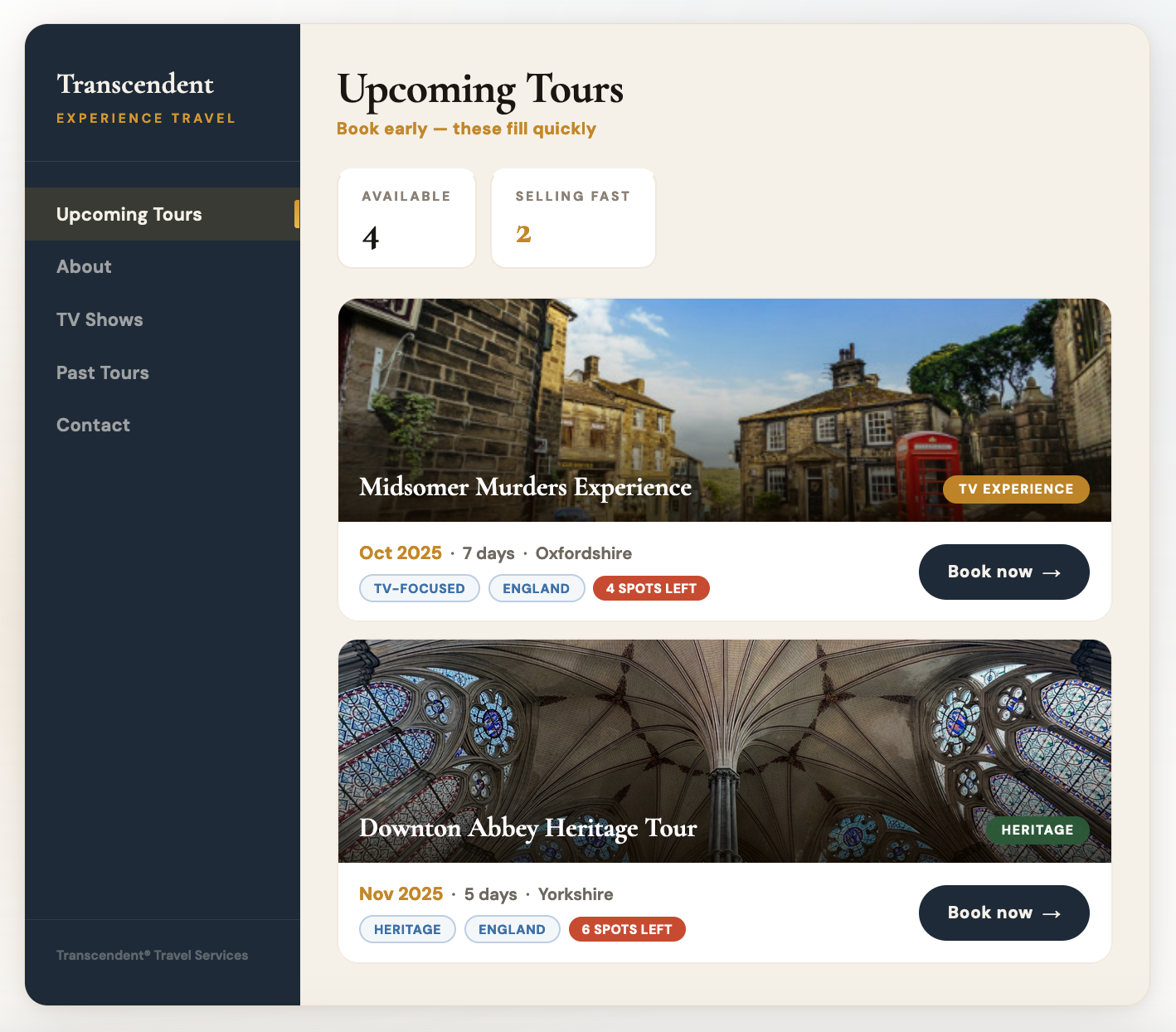
A simplified sitemap that centres "Upcoming Tours" as the primary destination. Conversion-led architecture creates a straight line from email interest to confirmed online booking, with accessibility-first typography and layout.

Third-Party Booking Engine

The problem

The booking engine introduced a jarring visual break — clashing colours, different fonts, and a completely alien UI — precisely when user trust needed to be at its highest.

The solution

A unified Figma design system that wraps the third-party engine in brand-consistent UI tokens, making the booking step feel like a native, trusted part of the Transcendent experience rather than a handoff.

HubSpot CRM Integration

The problem

Data from online bookings wasn't flowing cleanly into HubSpot, meaning the concierge follow-up experience — critical for a premium brand — was inconsistent and manual.

The solution

Mapped custom CRM properties to ensure booking data moves seamlessly from the e-commerce engine into HubSpot, enabling automated, personalised follow-ups that match the premium tone of the brand.

Legal & Consent Layer

The problem

Missing cookie consent banners for US and EU audiences created legal exposure. A fragmented approach also risked "banner fatigue" — interrupting users repeatedly with uncoordinated prompts.

The solution

Designed a unified privacy framework resolving region-switching bugs and banner repetition. Compliant, user-friendly, and invisible when working correctly.

From digital brochure to conversion engine

The core shift was structural. Rather than solving individual UI problems in isolation, the project delivered a system-level overhaul — replacing a fragmented, process-driven experience with a cohesive, intent-led one.

We maintained a highly organised workflow using Trello, Harvest and Google Sheets to manage the complexity of the audit across multiple workstreams simultaneously.

Persona & accessibility-first: The "Enthusiast" and "Transcendent Traveller" personas shaped every design decision — larger typography, reduced cognitive load, clear progress signalling, and simplified navigation paths calibrated for users who aren't power users.

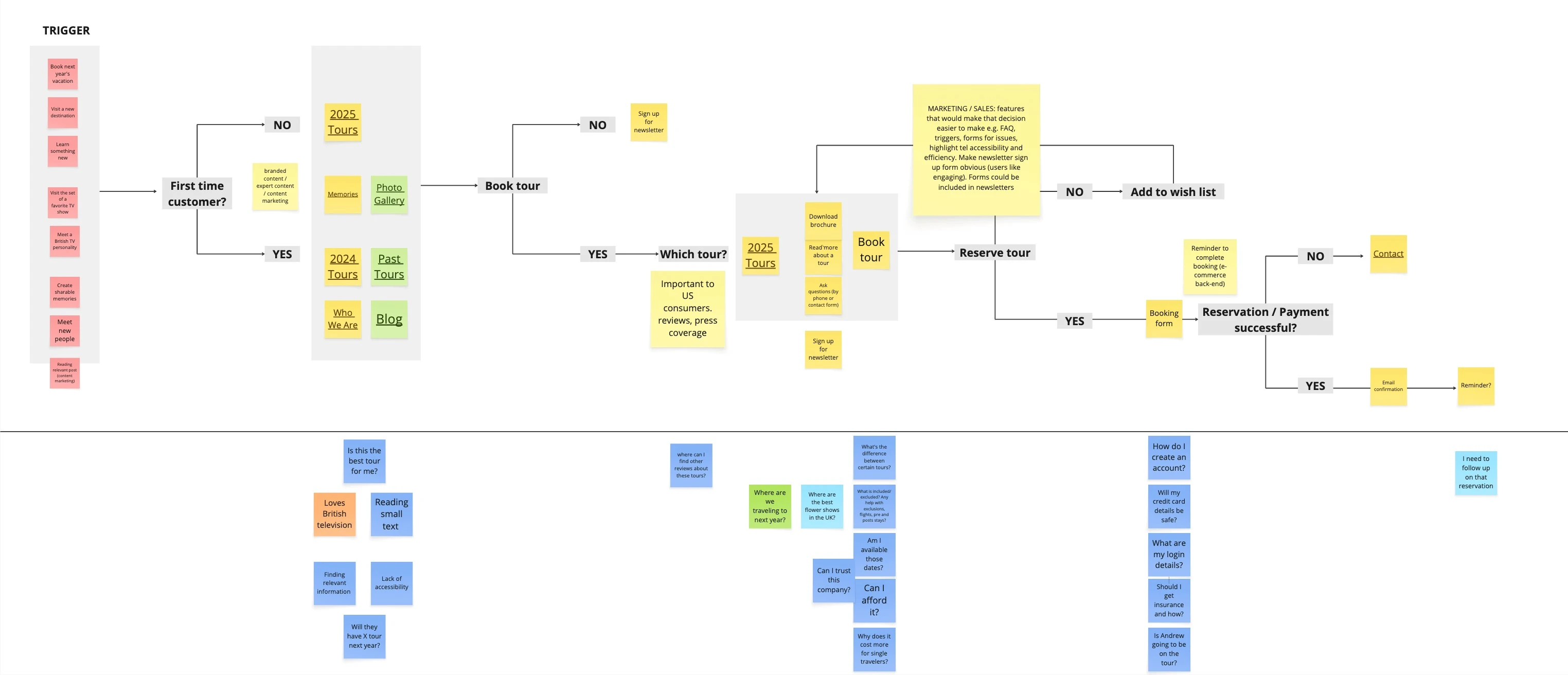
Service design lens: We blueprinted the full end-to-end journey, identifying precisely where the third-party booking integration broke user trust — and designed the handoff to feel seamless rather than jarring.
35 Failed Checks A AA AAA Semi compliant under WCAG 2.0, 2.1 & 2.2
75.33% Semi Compliant
Scopus profile editor overview
Research — persona definition & mapping
Scopus profile editor overview
Audit — information architecture review
Scopus profile editor overview
CRM — HubSpot property mapping
Scopus profile editor overview
Service design — full end-to-end experience blueprint
Design Screens

Built for trust at every touchpoint

Key screens from the redesigned Transcendent Travel platform — from homepage through to the booking confirmation experience.

Scopus profile editor overview
Before — existing site audit finding
Scopus profile editor overview
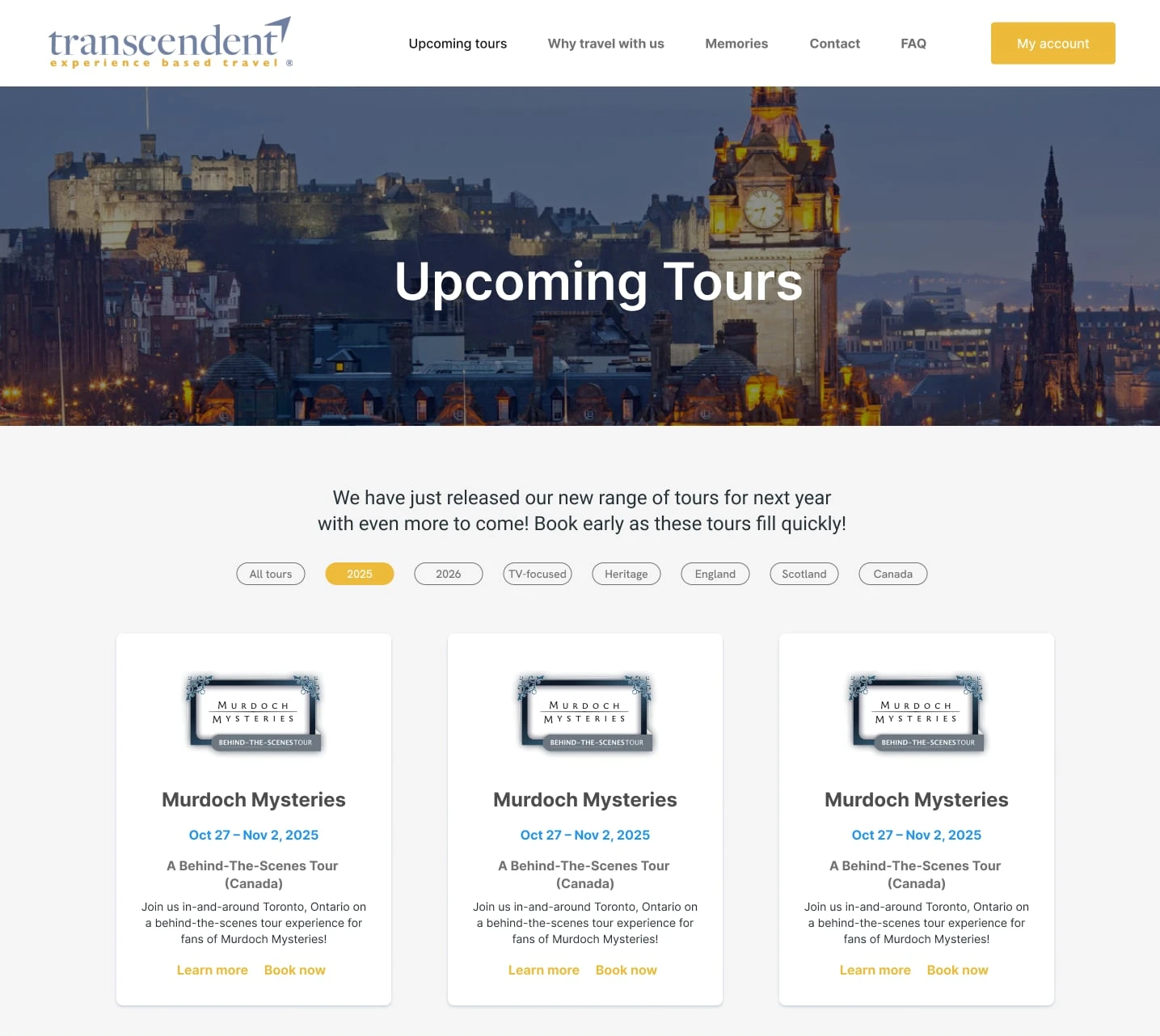
Proposed redesign — tour listing page
Scopus profile editor overview
Proposed redesign — unified booking flow
Scopus profile editor overview
Service design — end-to-end journey blueprint
Scopus profile editor overview
Research — persona definition & mapping
Scopus profile editor overview
Audit — information architecture review
Scopus profile editor overview
CRM — HubSpot property mapping

Organised for complexity

Managing an audit of this scope — spanning website, booking engine, CRM, legal compliance and email — required meticulous project management. We maintained parallel workstreams in Trello, Harvest and Google Sheets to ensure nothing was missed.

Persona research focused on specific cognitive and accessibility requirements for the primary demographic: larger typography thresholds, reduced decision fatigue, and the expectation of human-assisted booking as a fallback, not a first resort.

Service design blueprinting allowed us to map the exact moment where the visual "break" in the third-party booking flow was killing user trust — giving us a precise, evidence-based brief for the design system work.

Persona definition Accessibility audit Competitor analysis Photography guidelines CRM mapping Sitemap audit
Reduced phone dependency Target: shift routine bookings to online, freeing the team from administrative overhead.
Legal compliance resolved Cookie consent framework covering US and EU requirements, implemented without disrupting the user journey.
Brand trust at every touchpoint A unified Figma design system ensuring visual consistency from homepage through to booking confirmation.
Scalable CRM automation HubSpot properties mapped to e-commerce data, enabling personalised post-booking sequences without manual input.
Strategic Reflection

Premium brands need digital parity

The current live site serves as the "before" benchmark for the strategic roadmap we've built. By shifting to a service-design-led approach, we've created a blueprint that reduces administrative load and aligns the digital experience with the concierge-level quality of the tours themselves.

Key insights

Demographic-specific accessibility matters. Designing for an older, tech-limited audience requires rethinking defaults — from type scale to navigation depth to CTA prominence.

Third-party integrations are brand moments. The booking engine handoff isn't a technical edge case — it's the highest-intent interaction. Visual continuity there is non-negotiable.

Audit before solution. The breadth of the end-to-end audit — covering UX, legal, CRM and content — surfaced problems that a purely visual redesign would have missed entirely.

Premium positioning demands operational consistency. Concierge-level experience means the CRM, email and booking systems must match the quality of the physical product.

Future recommendations

Usability test with the target demographic. Moderated testing with older, tech-limited users would validate accessibility decisions before full implementation.

Establish a post-launch analytics baseline. Replace the 91% bounce rate benchmark with a structured measurement framework tied to conversion goals.

Extend HubSpot segmentation. Use booking data to create audience segments for targeted pre-tour content, increasing engagement and repeat bookings.

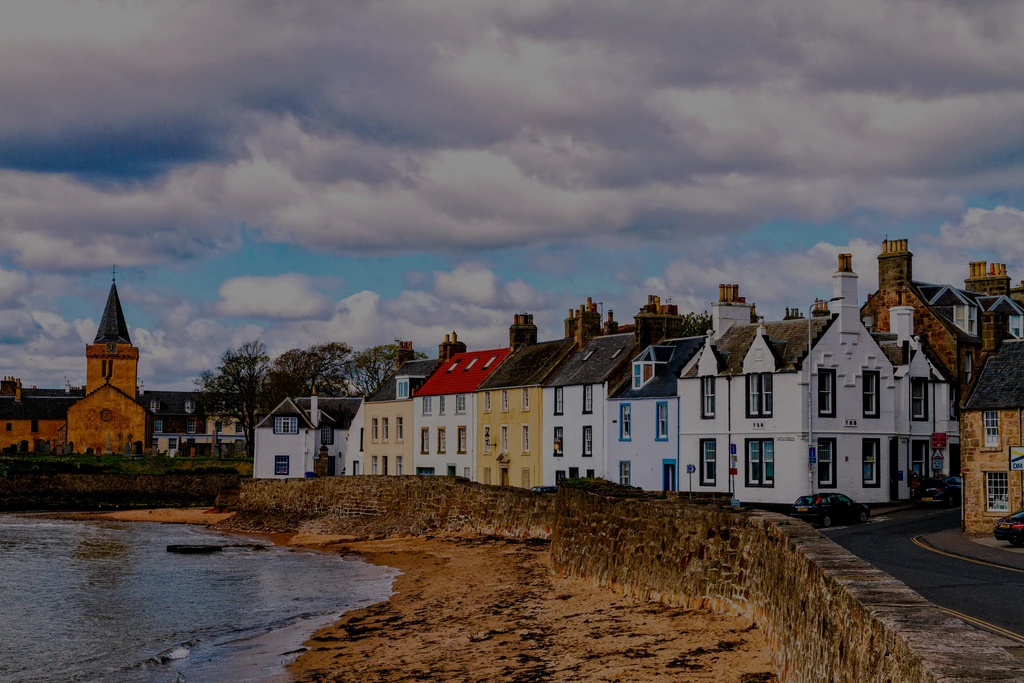
Iterate on photography guidelines. "Text-safe" image standards should evolve with the content library, ensuring accessibility standards are maintained as new tours launch.

See more of my work

Browse the full portfolio or get in touch to discuss how I can bring this kind of thinking to your team.